discord UX research & redesign
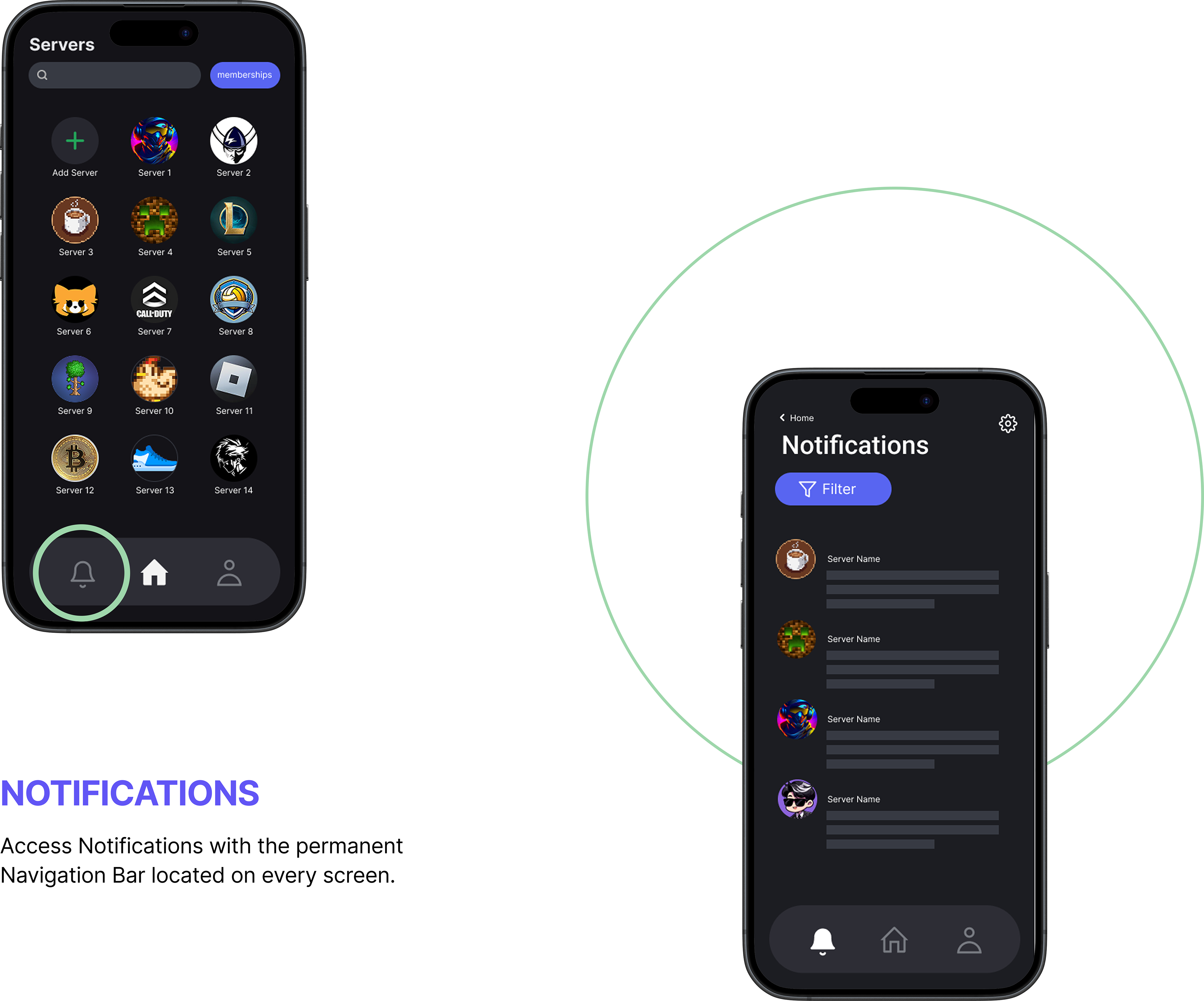
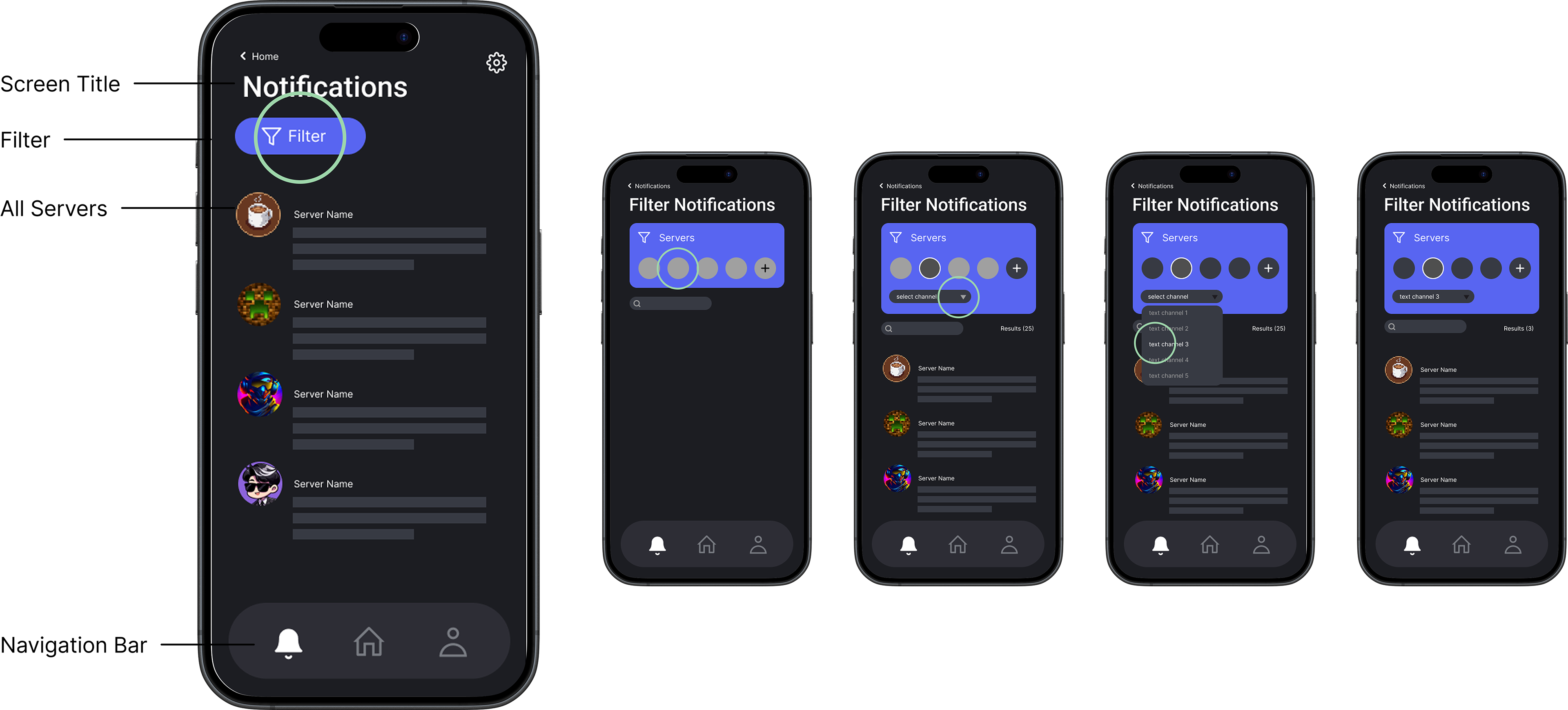
For this student project, I worked with a team to research and redesign aspects of the Discord mobile app. The bulk of the project was focused on conducting extensive user research to define the problems with our product. The steps to define our problems included interviews, user personas, journey maps, surveys, "how might we" statements, goal lists, product statements, site maps, and scenarios. We then used our research to create user task flows for our proposed product solutions. The project wrapped up with an introduction to wire framing to create a lo-fi prototype. After contributing to the research portion of the project, my role was developing the "notification filter" prototype task flow. You can view the full project case study by clicking the button below.
Project Team: Allison Knowles, Matheus Raymundo, Myles Rhea, Rowan Skipton
the TASK
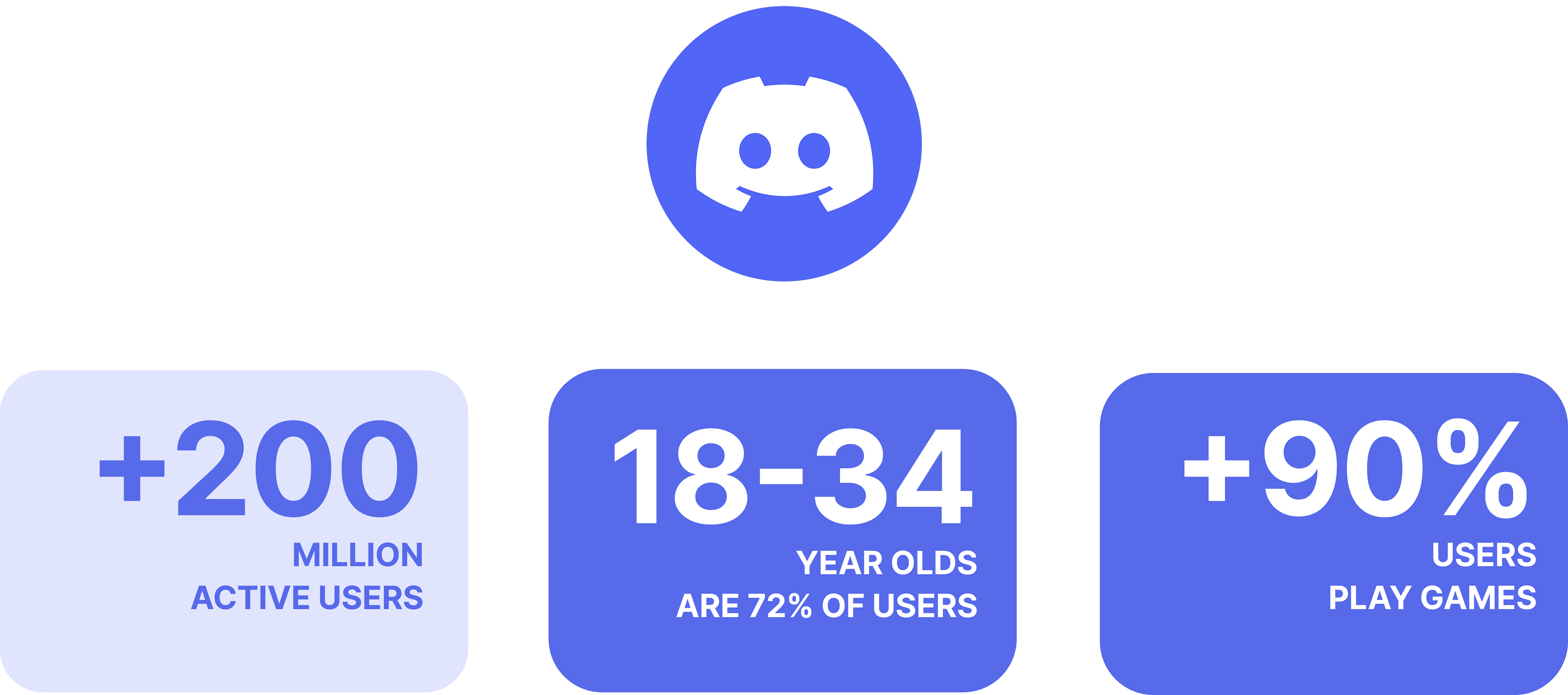
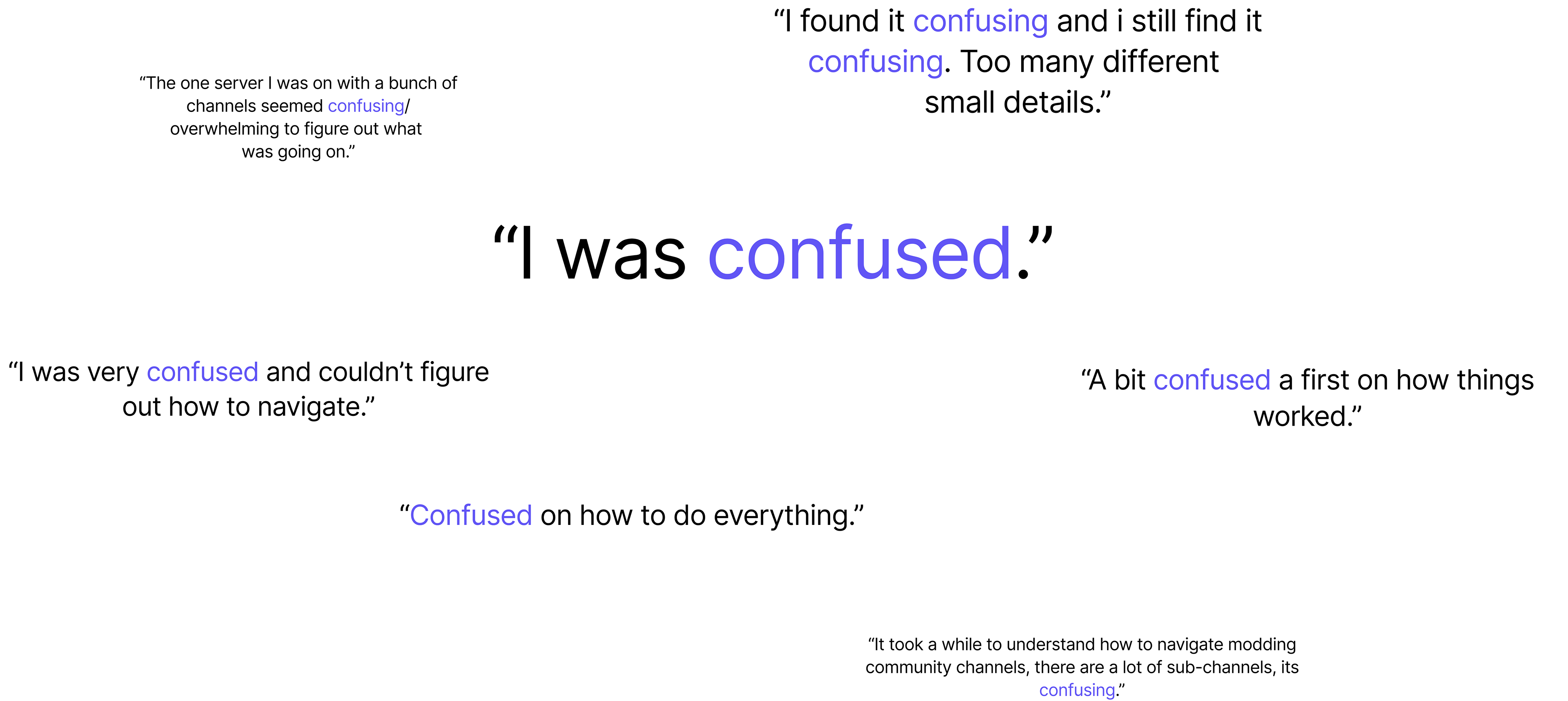
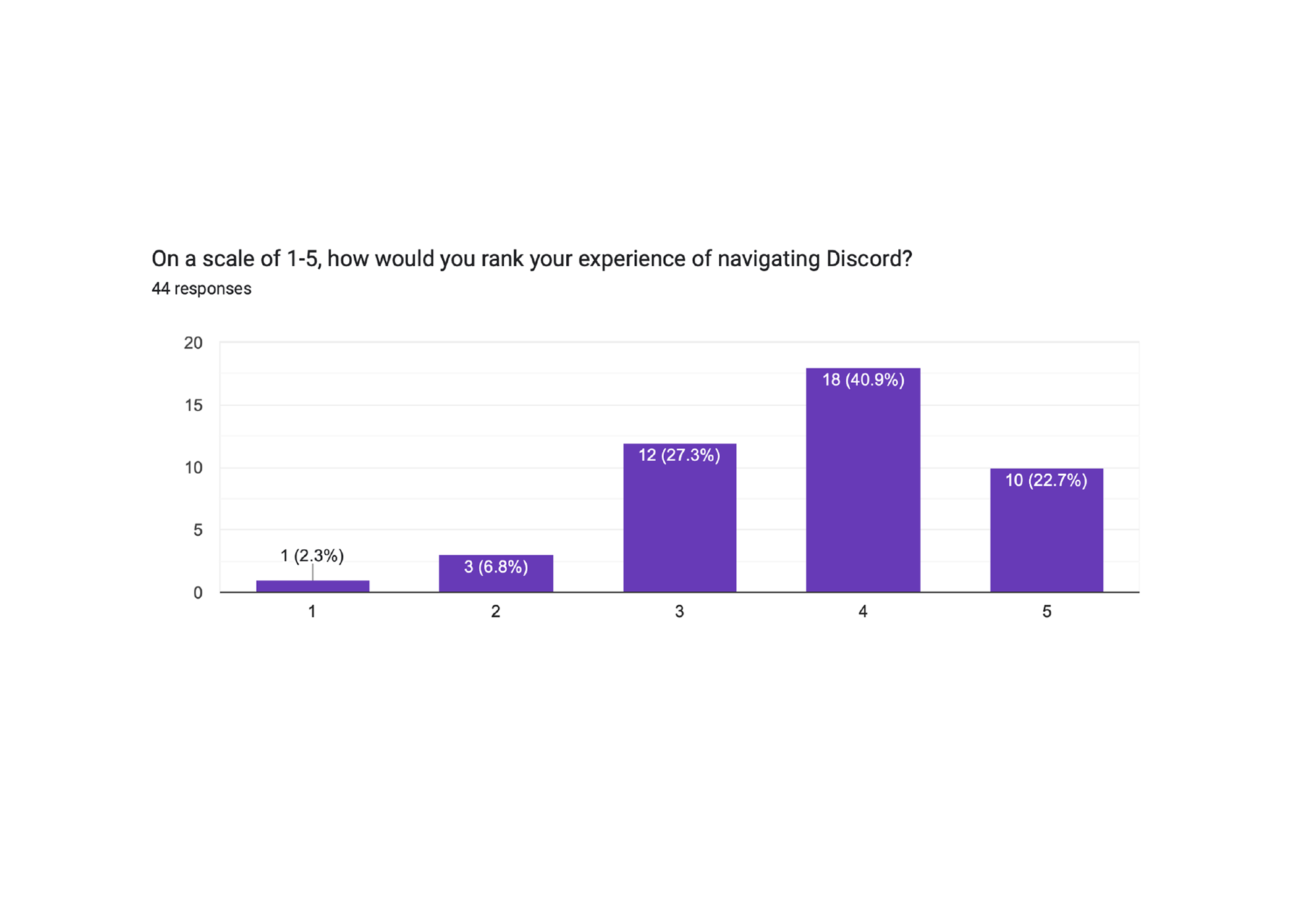
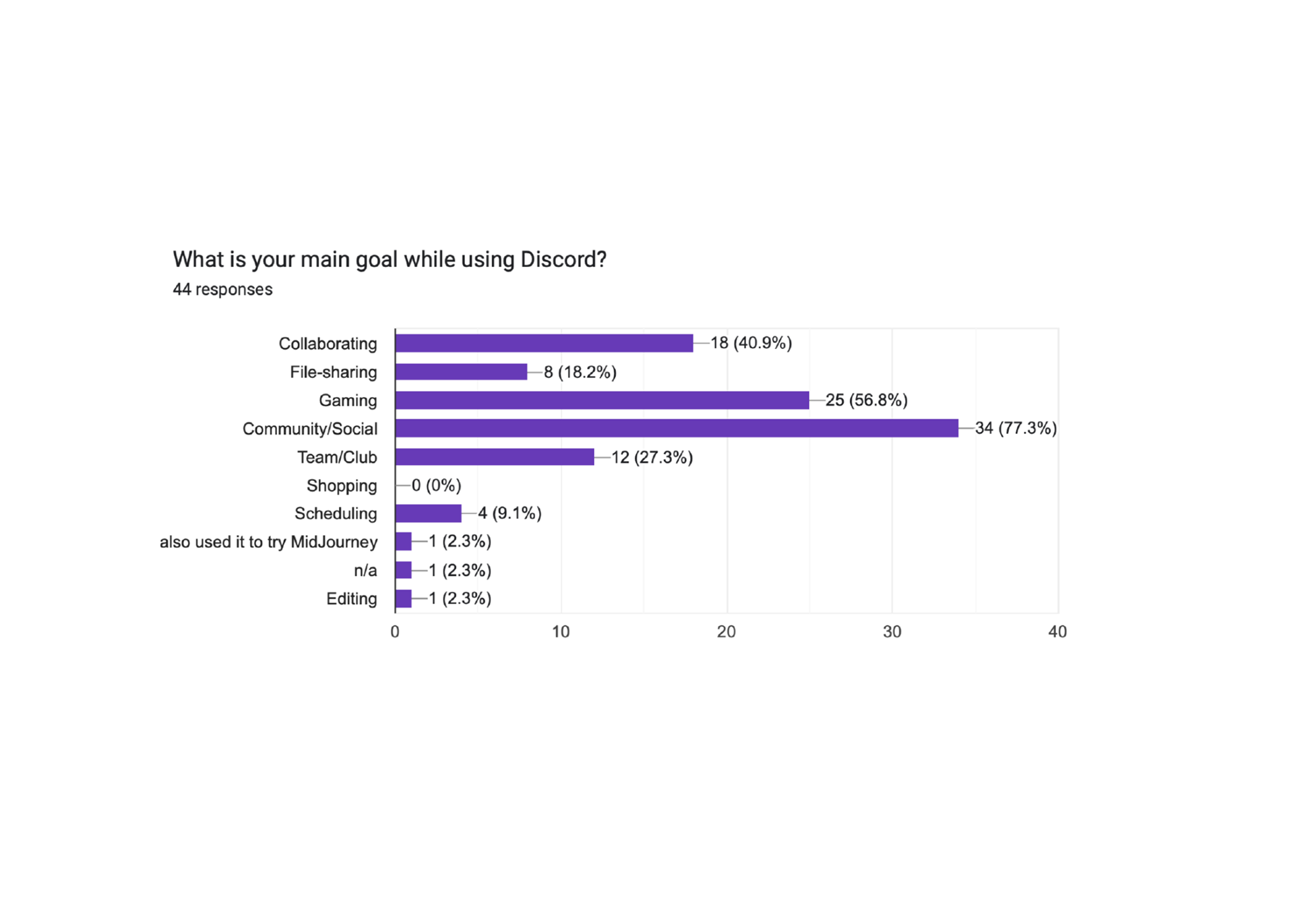
Discord is a free text, voice, and video communication platform used by over two hundred million people to hang out and play games with their friends. However, Discord suffers from a confusing and busy UI that creates cognitive overload. Many users have difficulty navigating the app and find its excessive number of features confusing. In a survey we conducted with 44 respondents, about 40% of users ranked Discord as moderately difficult to navigate. In addition, we discovered that while Discord currently caters exclusively to the gaming community, their audience is finding uses for the app beyond gaming. Nearly 80% of our survey respondents reported using Discord as a community/social app.
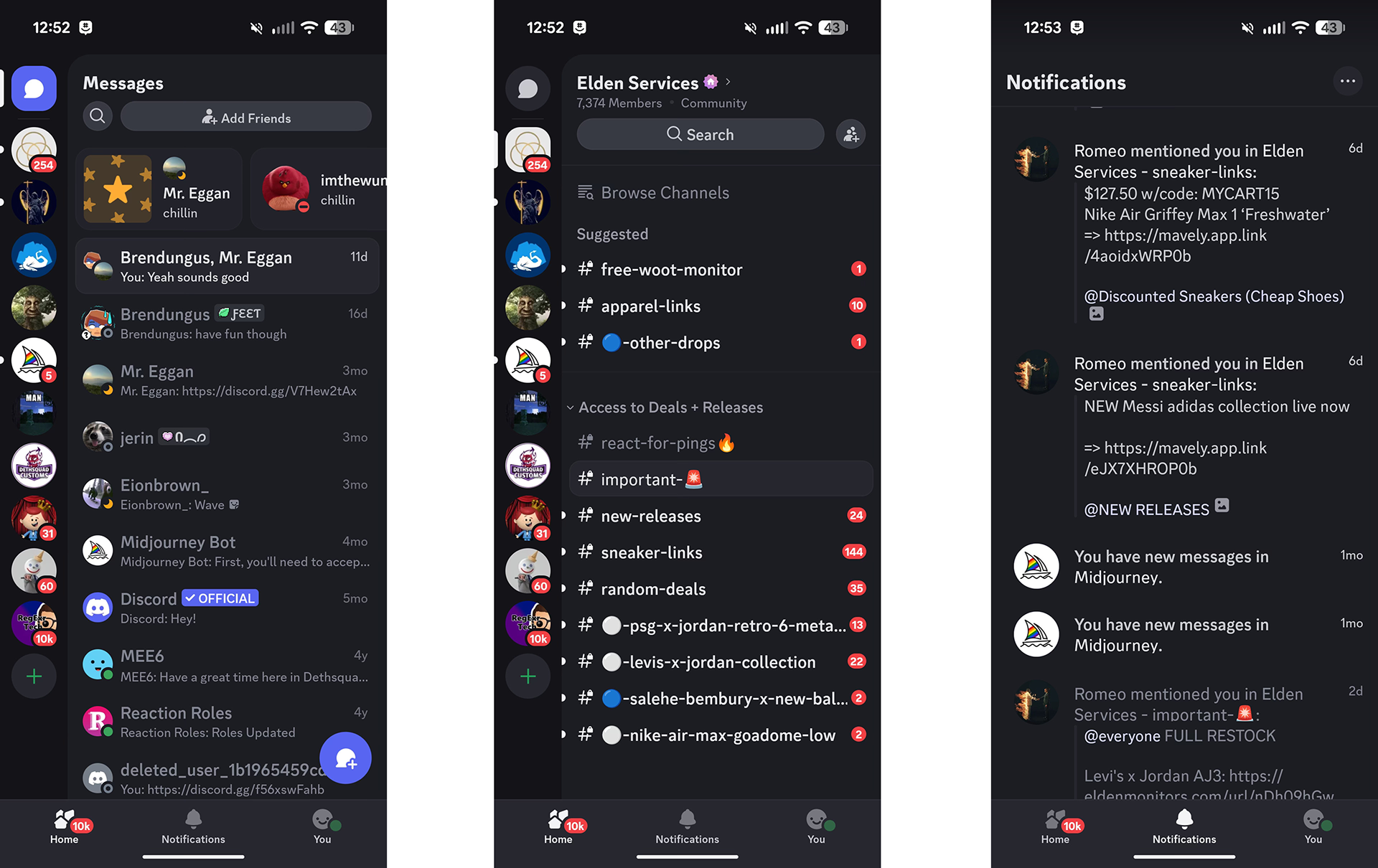
original screens
user feedback from surveys & interviews
the solution
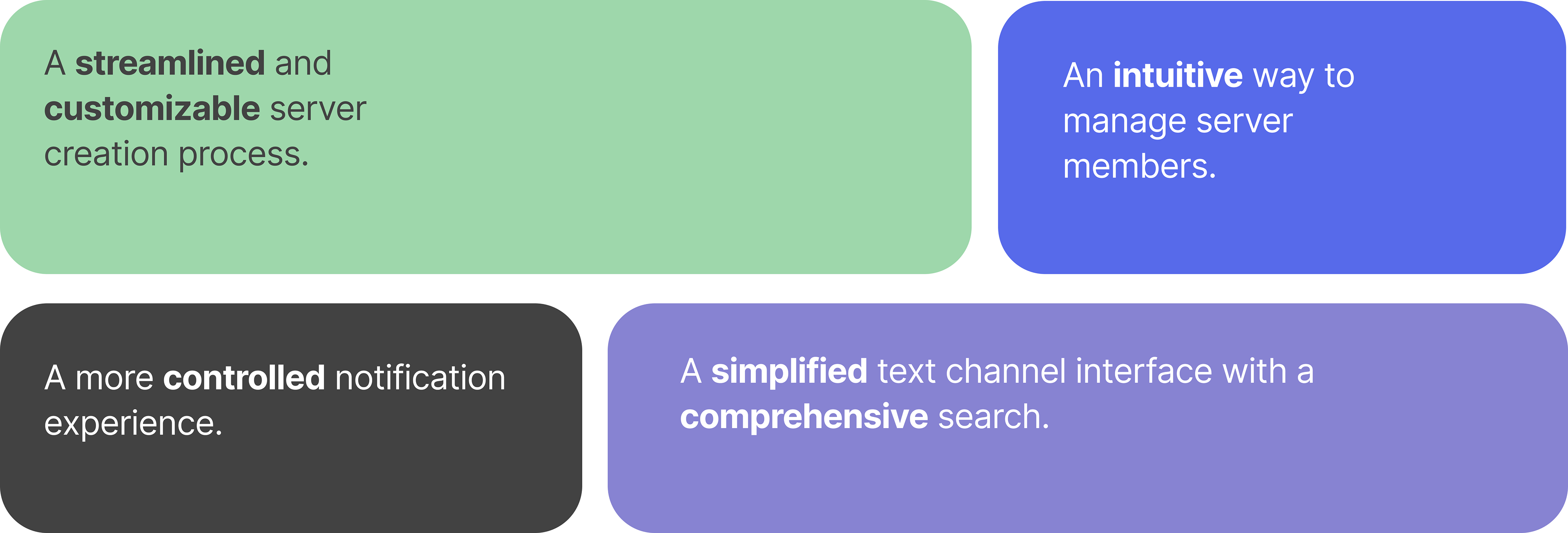
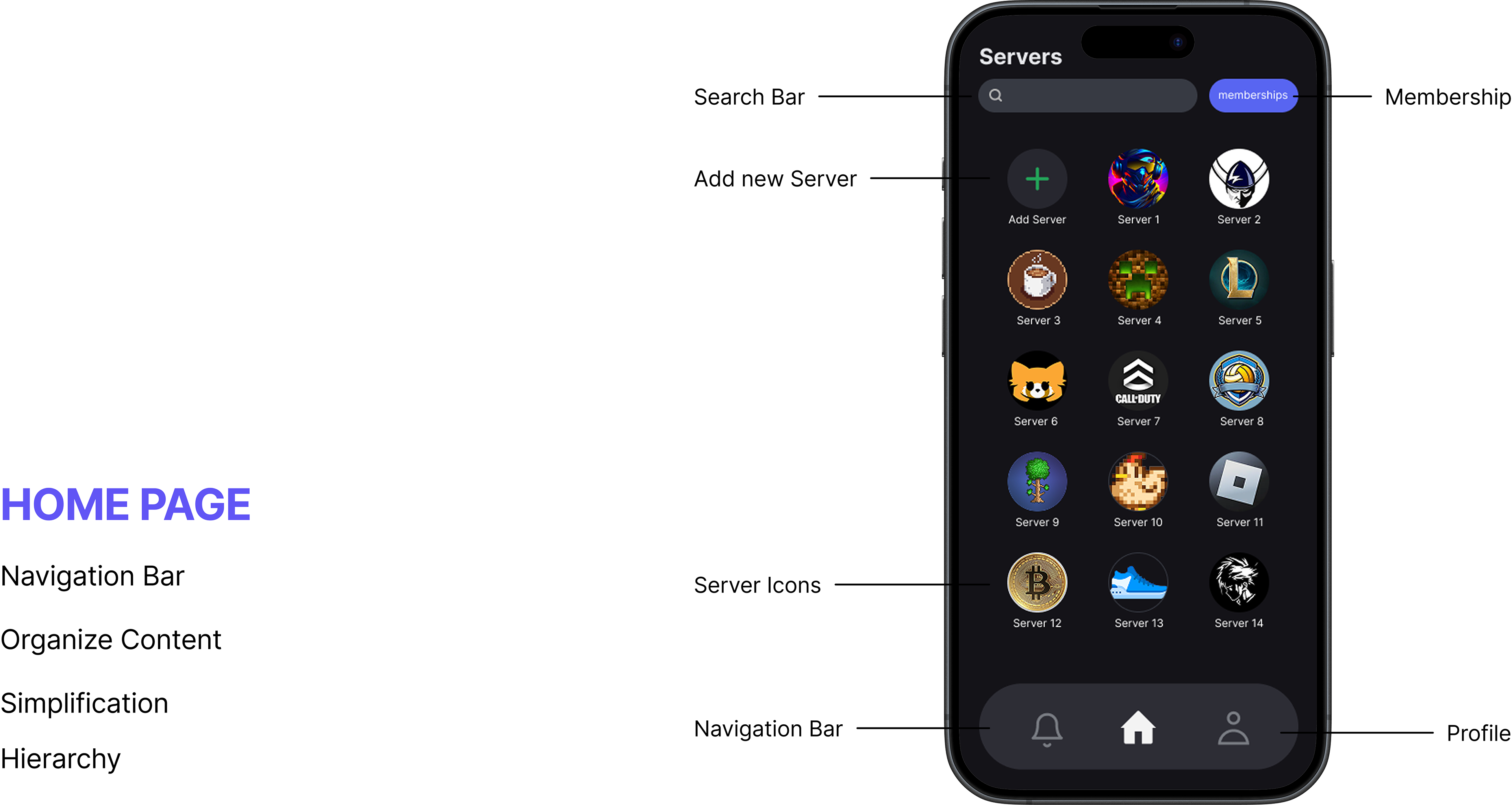
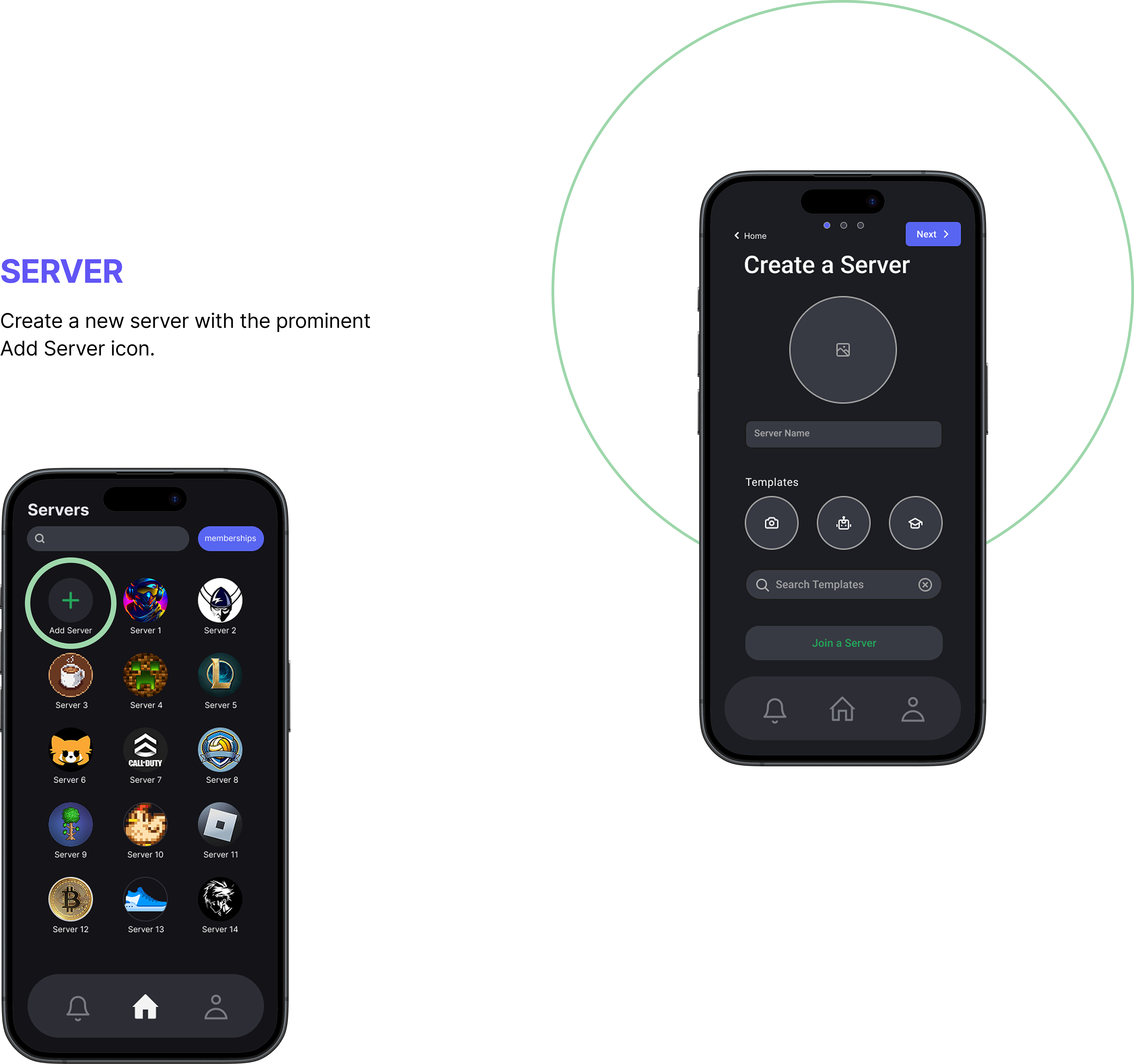
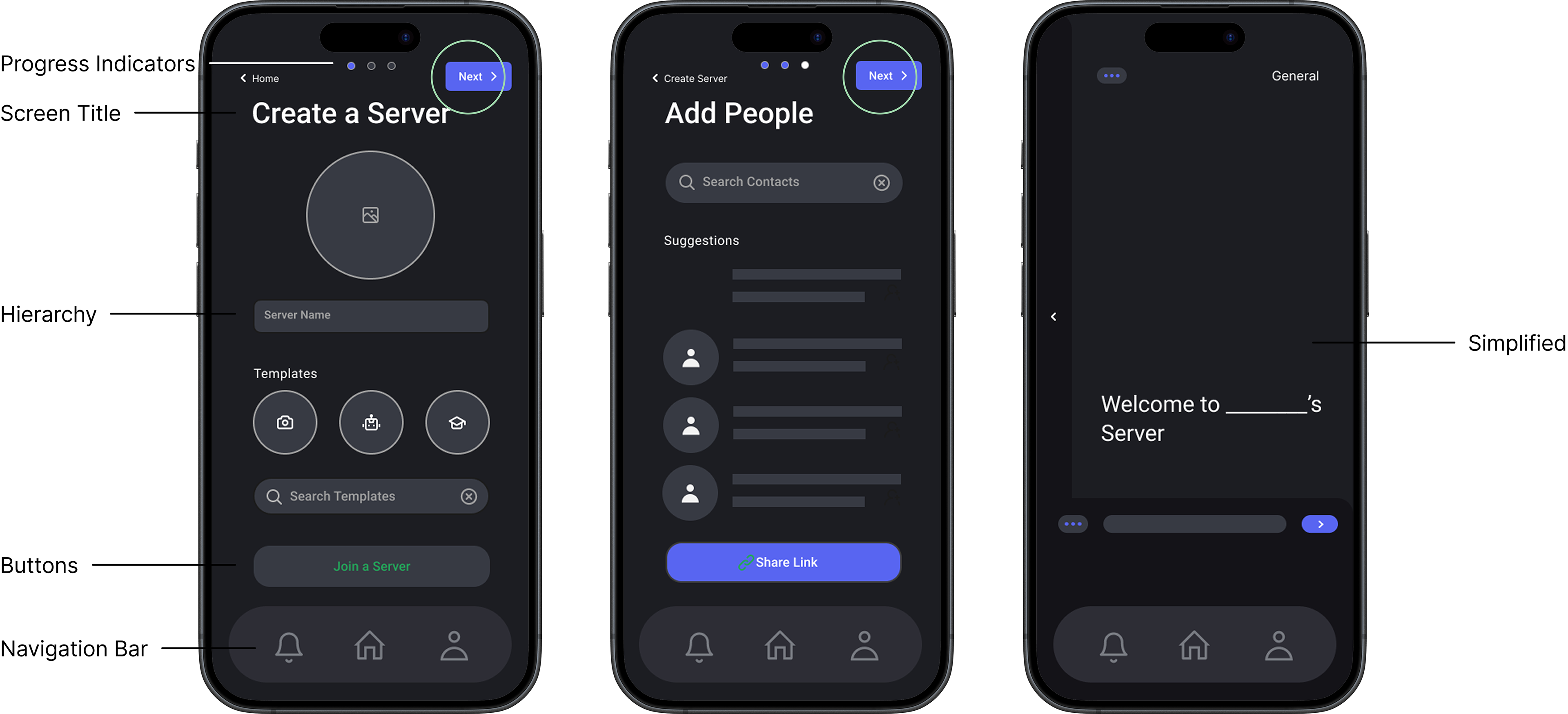
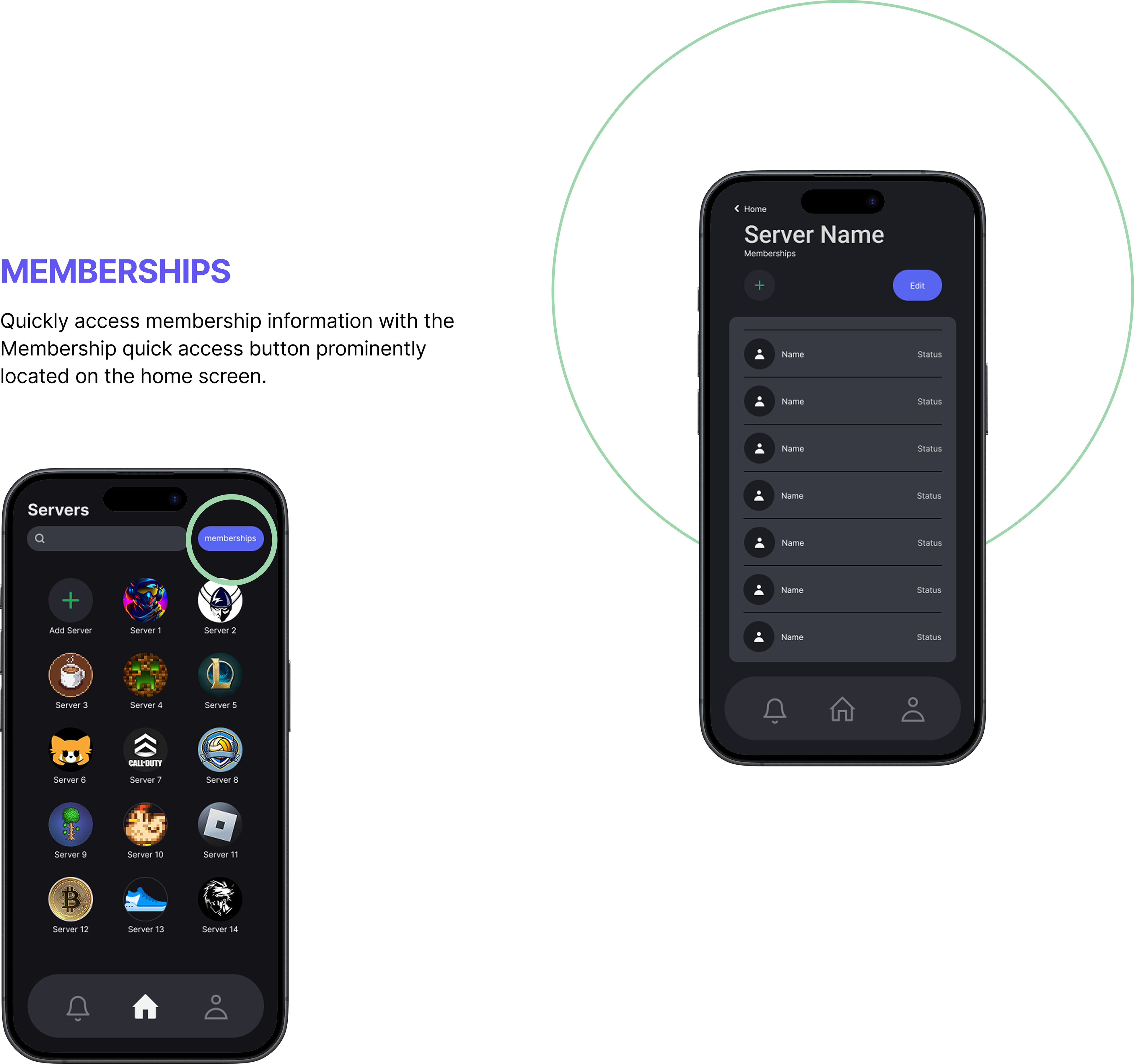
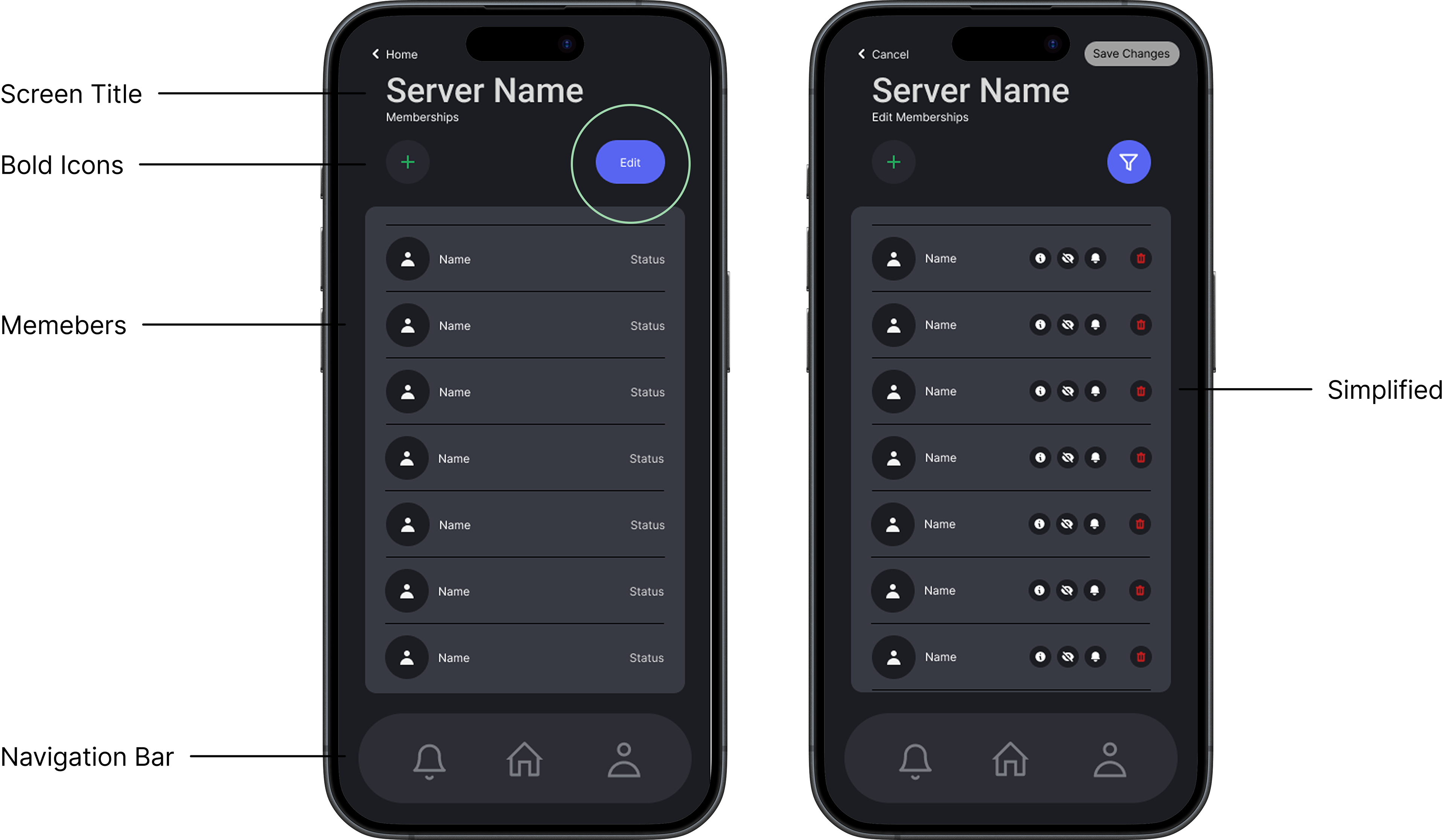
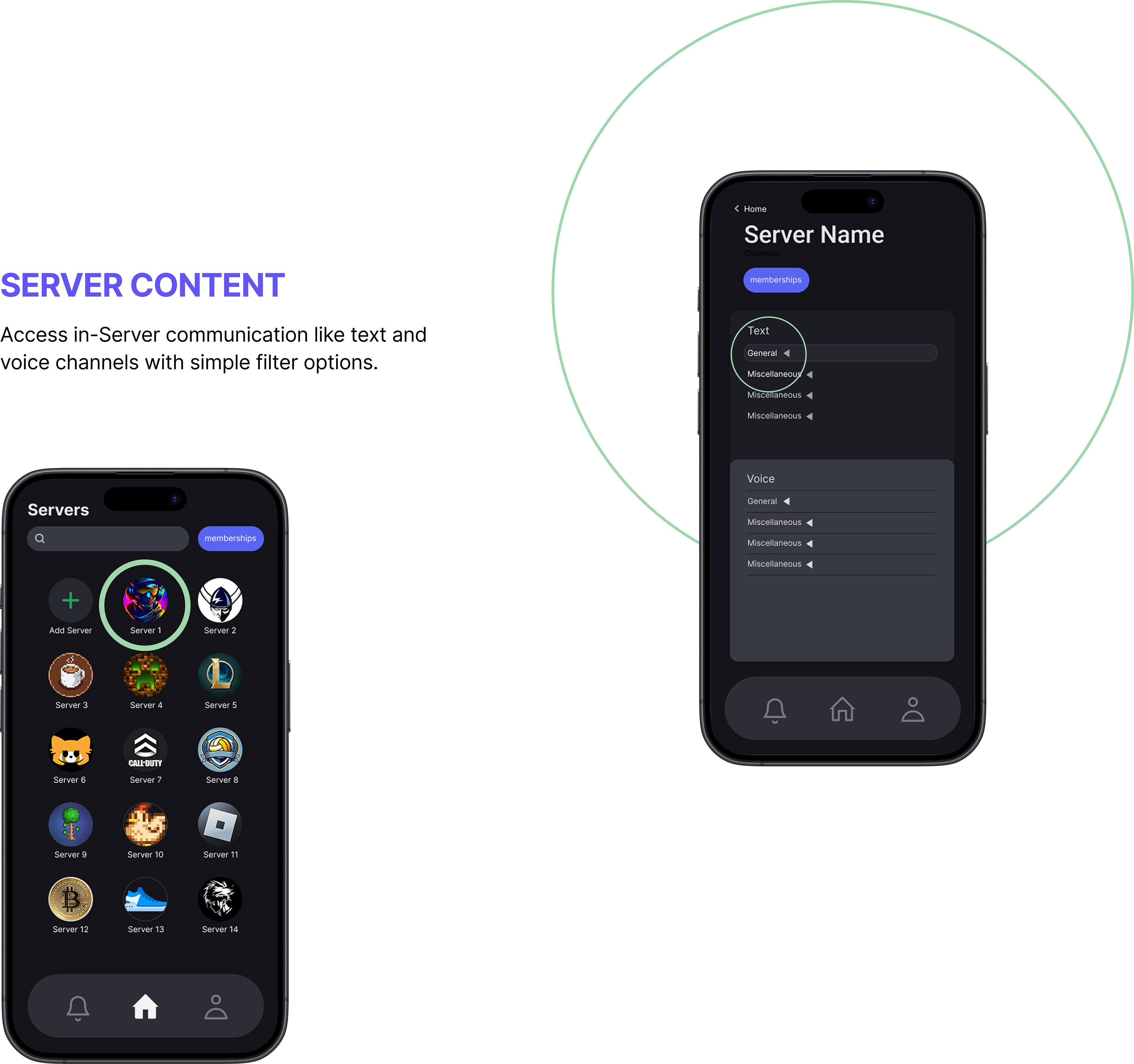
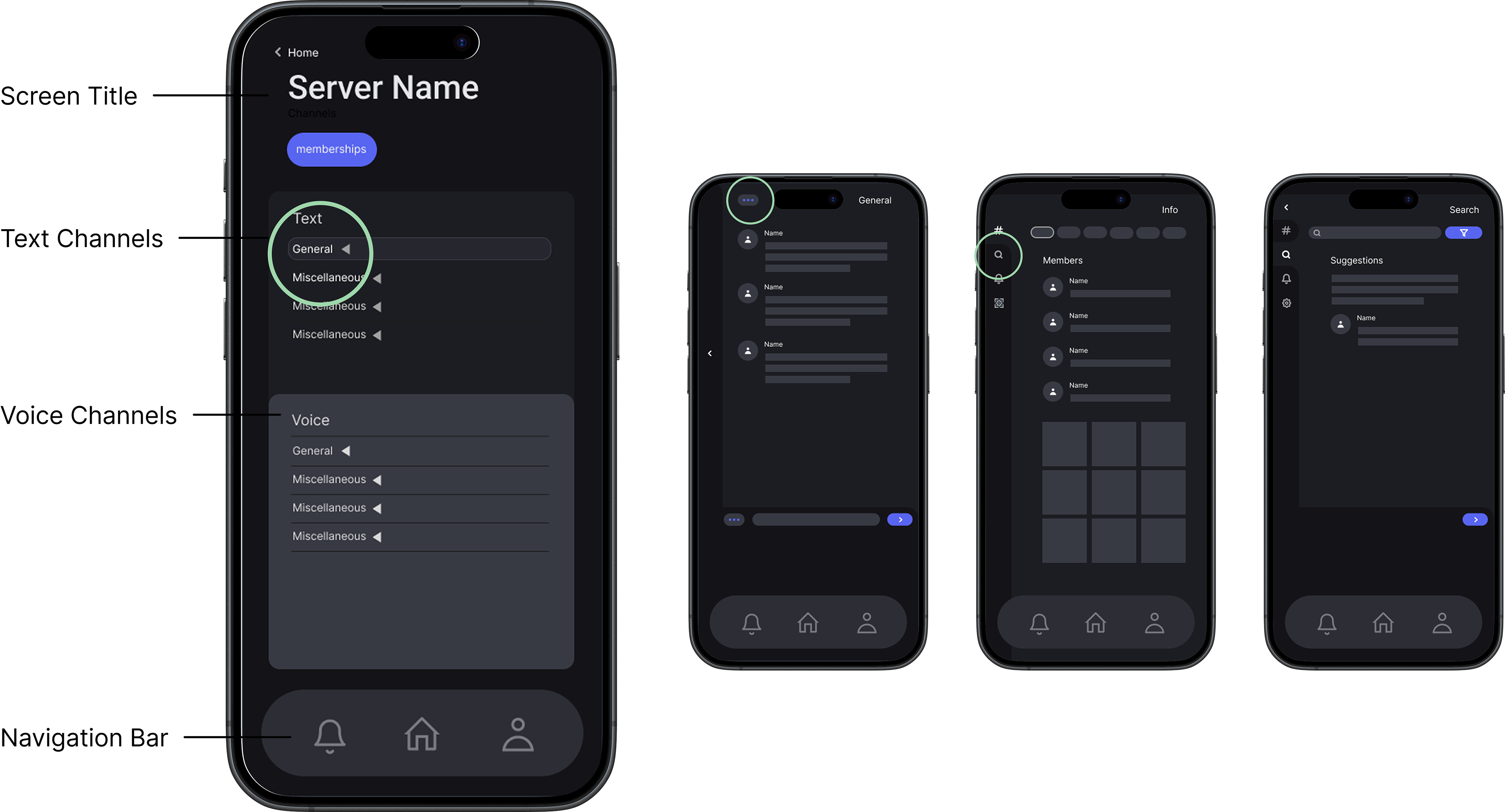
Our proposed solution was to highly simplify the layout of the app. We planned to create consistent layouts with an easy way for users to navigate between screens. We also wanted to design the app in a way that was more appealing to the community/social media community, which represents most of Discord’s current user base.
lo-fi prototype
the outcome
This project served as a general overview of the UX process with an emphasis on research, so the prototype was never developed into a hi-fi model. If we were given more time to refine Discord, we would create more customizable layouts for target user bases beyond the gaming community. To do this, we would begin by simplifying the moderator interface to make it more accessible and available to new discord users. Additionally, we would implement a clear way to customize which features are readily available in a given server. Finally, we would unify and blend the transition between server interfaces using different templates to allow for more user customization.